
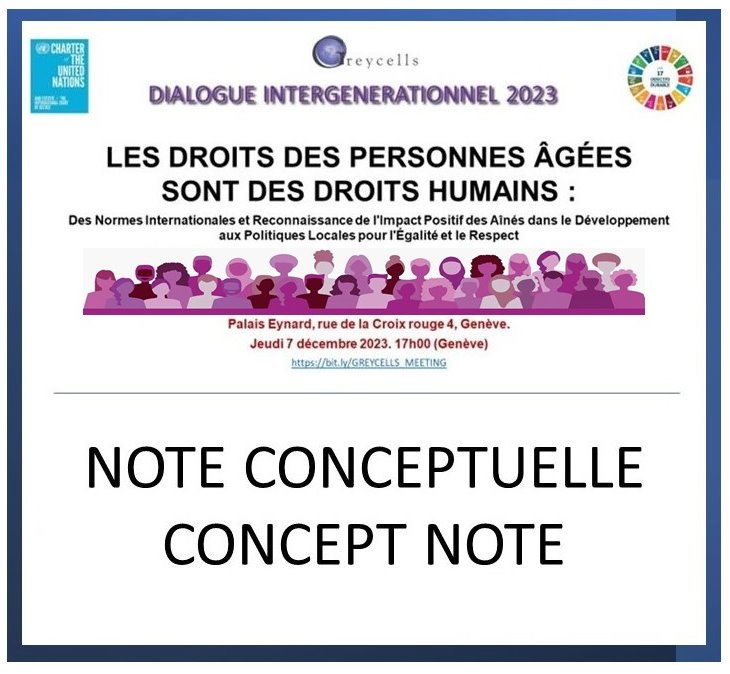
This intergenerational dialogue aims to situate the City of Geneva's current and future policies concerning older persons in the context of the international standards and principles recently adopted or proposed in this field. Compared to other countries and communities in the world, the City of Geneva is very advanced in this area, but the increasing ageing of the population requires the identification and planning of future needs. What are the differences and similarities between the measures taken in Geneva and the ideas debated at the international level, in particular the project launched in 2013 for an international Convention on the Rights of Older Persons? What lessons can be drawn from this comparison between the global level and the Geneva dimension?
With a growing population in absolute terms and as a percentage of the total population, older people play an increasingly important role in society, the economy and politics. However, on a daily basis and in view of their individual experiences, what do grandparents, active or inactive pensioners, children, teenagers, young people and the elderly think about them? With the ageing of the population and the increase in the number of older people, the influence and impact of older people on different aspects of society is becoming more pronounced. This demographic change has led to a greater recognition of the contributions made by older people in different areas of life. However, in order to fully understand their perspectives, it is essential to take into account the views of different age groups.
Grandparents, with their life experiences and accumulated wisdom, often provide guidance and support to their families. They are highly valued for their role as caregivers and are seen as a source of stability and continuity. Many grandchildren cherish the strong bond they share with their grandparents and appreciate the unique perspective they bring to their lives. Active or inactive retirees, depending on their personal circumstances, may have different views on the growing role of older adults in society. Some may take the opportunity to engage in interesting activities, pursue new interests, or even contribute to their community through volunteering or part-time work. Others may experience a sense of accomplishment by enjoying a well-deserved retirement, dedicating themselves to personal activities, or spending quality time with loved ones.
Children, adolescents and young people, who are part of the younger generations, often have different attitudes towards the elderly. Some see them as valuable mentors, sources of advice, or role models. Others have limited interaction with older adults and may not fully understand the importance of their contributions. However, it is increasingly common for younger generations to recognize the importance of intergenerational connections and to appreciate the knowledge and experiences that older adults can offer.
Older people themselves, who are part of the ageing population, may have diverse perspectives on the changing role of their role in society. Many of them can take the opportunity to stay active, pursue new interests and continue to contribute to their communities. They can advocate for policies and initiatives that support the needs and rights of older persons, with the aim of creating an inclusive and age-friendly society. However, it is important to recognize that individual experiences and circumstances vary, and that some older adults may face health challenges, social isolation, or financial security.
In conclusion, the growing role of older people in society is perceived differently by different age groups. While grandparents, active or inactive retirees, children, adolescents, youth and the elderly all contribute to the complex tapestry of perspectives, it is crucial to recognize and respect the diversity of opinions and experiences within each group. By encouraging dialogue and understanding between generations, we can build a society that values the unique contributions of people of all ages.