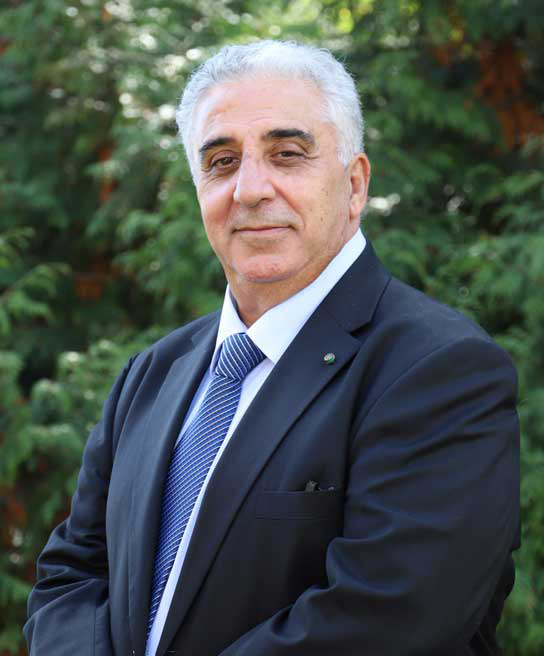
Mr. Carmelo VACCARO
(Italian who arrived in Geneva in 1980 as a seasonal worker)
– What were the circumstances that led you, in the 1980s, to leave Italy and come to Geneva?
I left Sicily in March 1980 for several reasons, one of which was to be able to flourish with a secure job and without asking for favors.
Switzerland, mentioned as a destination with a high sense of civic duty, seemed to me to correspond to the education I had received from my parents.
The 70s and 80s were years when the small towns of southern Italy emptied and, above all, years when so many young people were looking for a better future.
– What was your impression of the political, economic and social context you encountered when you arrived in Geneva?
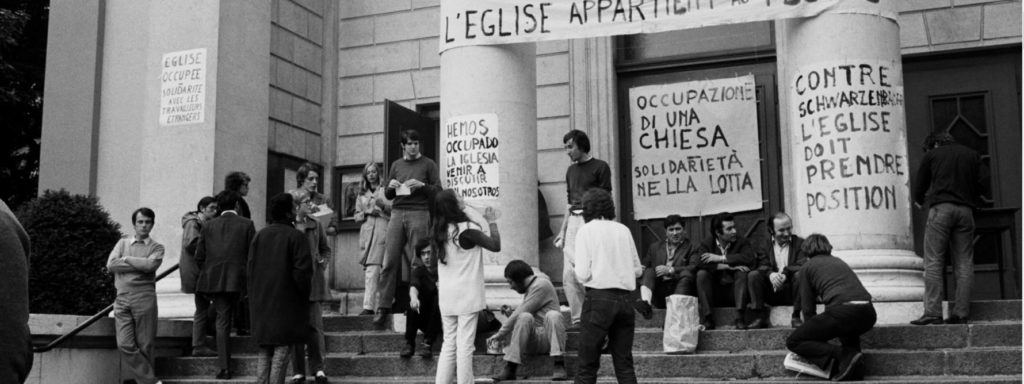
At first, it was dramatic to move to Geneva. Like other young people my age who had just arrived, I was confronted with various questions that made us immediately aware of a reality that was harsher than we had imagined. The cold, getting used to a radical change and everything that included seasonal status. We must also take into account the remnants of the Schwarzenbach era and its battles against foreigners, where it was the Italians who were most penalized.
– What were the biggest challenges you had to overcome in your onboarding process?
First of all, I would say, as mentioned above, the radical change in the environmental, cultural and interpersonal aspect. To this I would also add my personal adaptation to a different language, to an advanced civic culture, which certainly enriched me, but which I had to integrate into my culture of origin. I would like to emphasize that in those years of the not yet complete era of globalization, the culture of southern Italy was characterized by much more distinctive elements than it is today, which in turn required a greater individual commitment to an integration that did not denigrate the original values.
I would add that when I arrived in Geneva, my first home, as for many immigrants, was the barracks of St-Georges in the commune of Petit-Lancy. On top of that, having no relatives there, the uncertainty of the future, in addition to loneliness, was a great source of worry as well as inspiration for a will to emerge with a present and redeemed dignity.
– What is your opinion on the evolution of migration in Geneva, from its arrival in the 1980s to the current context?
Certainly, over the years, Geneva has adopted more welcoming social policies that promote total integration, in accordance with the processes of social evolution that we have been able to mature, implement and experiment with in recent years.
The struggles waged by the many social associations that have claimed the fundamental rights of the moral integration of the individual have granted the new generations a reality that is totally opposite and more favorable than that of historical emigration.
I believe that this new social context in which so many of us have been the protagonists has been a source of pride for Geneva and for ourselves. This common civic commitment made me even more convinced and confirmed the correctness of the choice of my destination that I made in the 80s, to the point of naturalizing myself with conviction and pride, a choice that many of my peers shared.
It must also be considered that the vast majority of today's emigration is represented by educated people with jobs in multinational companies, already equipped with the knowledge of several languages, commonly known as "expats", and enjoying greater opportunities upon arrival.
TV report on the Schwarzenbach initiative. RTS
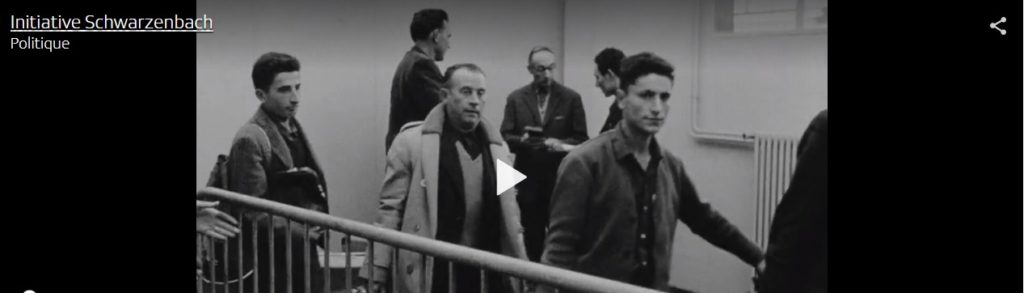
The Schwarzenbach Initiative
The initiative of 7 June 1970 against foreign overpopulation, led by James Schwarzenbach, remains one of the most controversial referendums in the history of Switzerland in the twentieth century. (Click on the image below for more information)